
Artificial intelligence is changing the creative world. But does faster design necessarily mean better design?
The Rise of AI in the Creative World
Artificial Intelligence has become one of the most talked-about developments in the creative industry. From generating images and writing content to creating logos, presentations and marketing materials, AI tools are transforming how creative work is produced. What once required hours of brainstorming and designing can now be generated within seconds. But this rapid transformation raises an interesting question: Can artificial intelligence truly replace human creativity, or is it simply changing the way we create?
AI Can Create, But Can It Understand?
AI tools are remarkably efficient at generating visual concepts, suggesting layouts, exploring colour combinations and producing design variations. For businesses, this means faster turnaround times and greater opportunities to experiment with ideas. However, creativity involves much more than producing something visually attractive. A successful design must understand the audience, communicate the right message and evoke the intended emotion. AI can recognise patterns and generate impressive results based on existing information. But it does not experience emotions, understand personal memories or possess human intuition in the way people do. This is where human creativity continues to play an essential role.
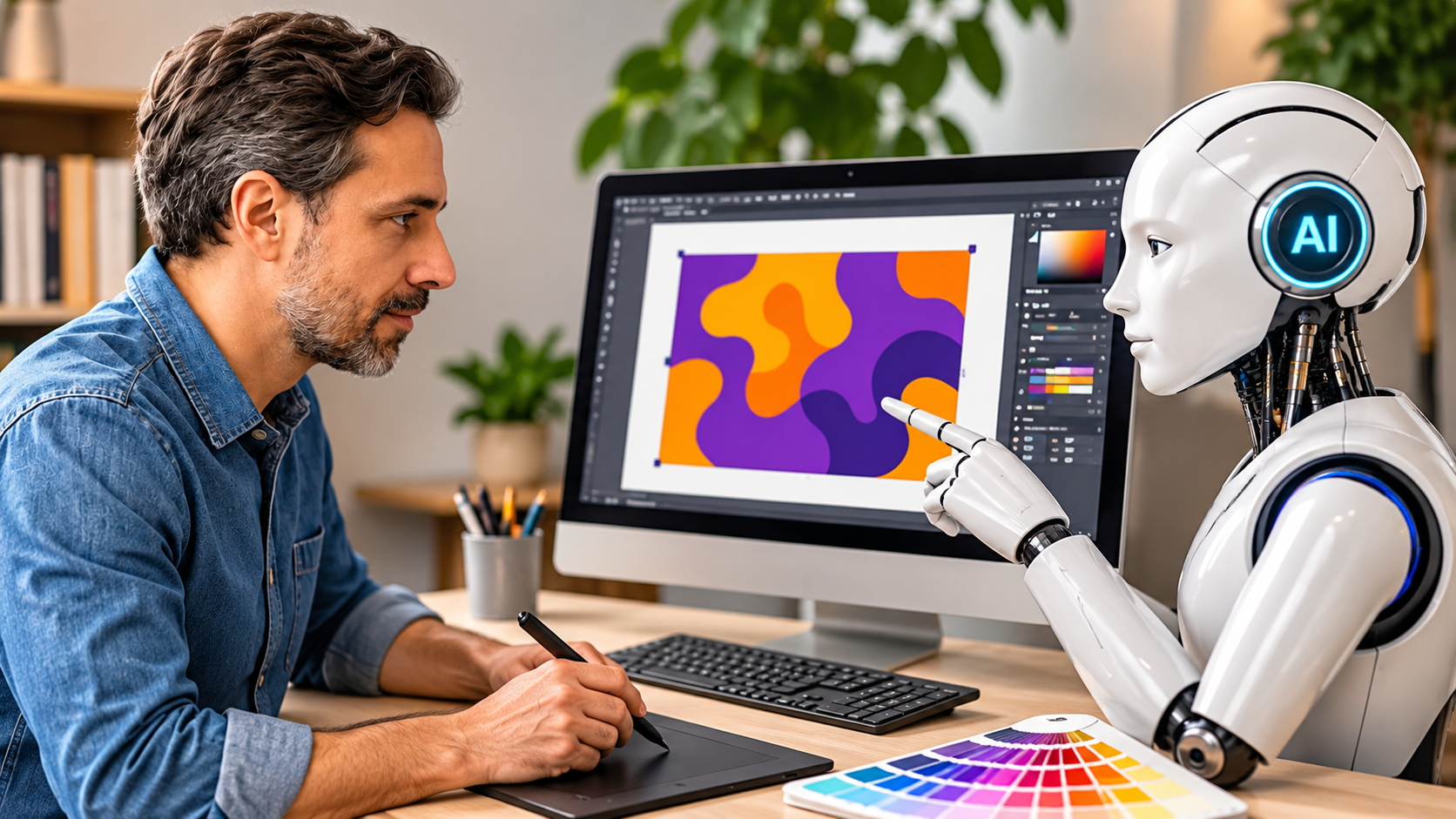
Human creativity and AI working together
The Human Touch Makes the Difference
Think about a wedding invitation, a company’s annual report or a brand identity. Each requires a different creative approach. A wedding invitation carries emotions, traditions and personal significance. An annual report needs clarity, structure and credibility. A brand identity must communicate the personality and values of a business. These are not simply exercises in choosing colours, fonts and images. They require an understanding of people, purpose and context. Human designers bring experience, judgement, empathy and storytelling into the creative process. They make decisions not only about how something should look, but also about why it should look that way.
AI as a Creative Partner, Not a Replacement
Rather than viewing AI as a competitor, it may be more useful to see it as a creative partner. AI can assist with brainstorming, generating initial concepts, exploring design directions and simplifying repetitive tasks. This allows designers to spend more time refining ideas, developing meaningful concepts and solving communication challenges. The real value lies in combining technological efficiency with human imagination. When used thoughtfully, AI can enhance creativity rather than diminish it.
The Future Belongs to Thoughtful Creativity
As AI continues to evolve, the creative industry will undoubtedly change. The ability to generate attractive visuals quickly may become increasingly common. However, knowing which ideas are meaningful, relevant and effective will remain just as important. At DigitalBigBang, we believe that good design goes beyond visual appeal. It is about transforming ideas into purposeful communication that connects with people. Technology may change the tools we use, but creativity will always depend on the ideas, understanding and decisions behind the design.
AI can generate a thousand designs in seconds. But can it truly understand the emotion behind a single idea?
Perhaps the future of creativity is not about choosing between humans and AI, but discovering what they can achieve together.